EMDR
Helping the brain and body process experiences that feel "stuck", so memories can lose their emotional charge — and you can move forward with greater calm and clarity.
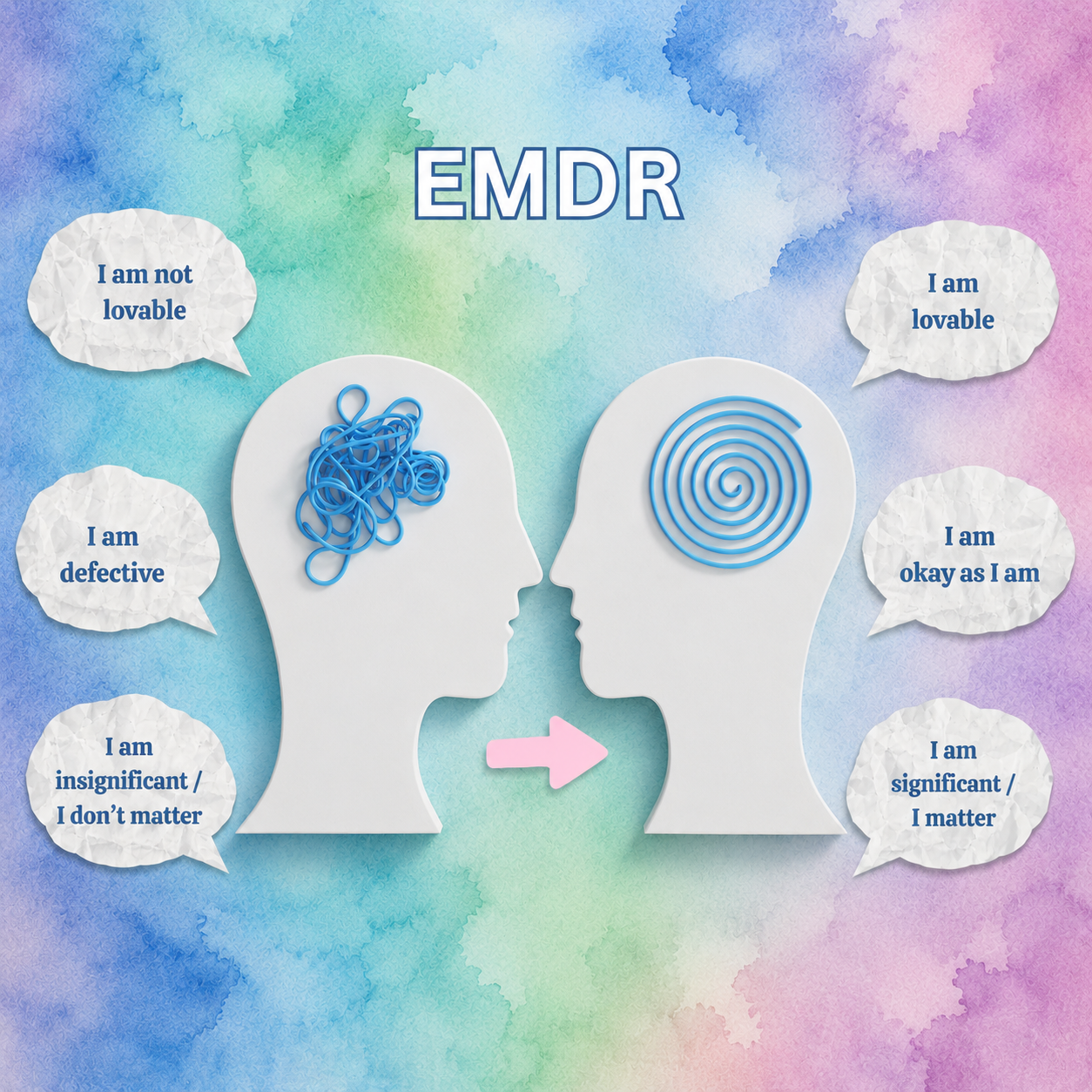
Processing painful memories, gently
Francine Shapiro developed EMDR — Eye Movement Desensitisation and Reprocessing — as a therapeutic approach to help people process traumatic experiences and reduce the emotional impact of painful memories.
Sometimes difficult experiences can become "stuck" in the nervous system. Even when we know logically that something is over, our body holds the memory as though it is happening now. When that memory is triggered by something in the present, we experience emotions and react as though the experience is happening right now.
EMDR helps the brain and body process these "stuck" experiences, allowing memories to become stored differently and lose their emotional charge. People are then able to move forward with greater calm, clarity and emotional freedom.
EMDR may be helpful for…
- Trauma and post-traumatic stress
- Anxiety and panic
- Grief and loss
- Adverse childhood experiences
- Distressing memories
- Low self-worth or negative self-beliefs
- Overwhelm, fear or emotional reactivity
What happens during EMDR?
EMDR therapy involves talking together, developing emotional safety and coping strategies, and then gently working with the memories, thoughts, emotions and body sensations connected to difficult experiences.
During processing, bilateral stimulation is used — this may involve eye movements, tapping, or alternating sounds. Many people describe this as helping the brain "digest" experiences that previously felt overwhelming or unresolved.
EMDR is not hypnosis, and you remain aware and in control throughout the process. The pace of therapy is always guided carefully and collaboratively, with attention to safety, readiness and emotional support.
Every person's story is different.
For some people, EMDR can help reduce the emotional intensity of past experiences quite quickly. For others, therapy may involve slower, deeper work that unfolds over time.
My approach is warm, grounded and trauma-informed, with care taken to create a space where people feel emotionally safe, respected and supported.
Ready when you are.
I'm currently available for online and face-to-face appointments at my room in Inverloch on Mondays, Tuesdays and Wednesdays.